Birds on a roof may look harmless, but regular nesting and roosting can create problems for your property. Pigeons, gulls and other birds can leave droppings, block gutters, damage roofing materials and build nests in areas that are difficult to inspect from the ground.
Drone roof surveys for bird control provide a practical way to understand what is happening without immediately sending someone onto the roof. Clear aerial images can help locate nests, bird fouling, damage and possible access points so the right bird proofing solution can be planned.
What Is a Drone Roof Survey?
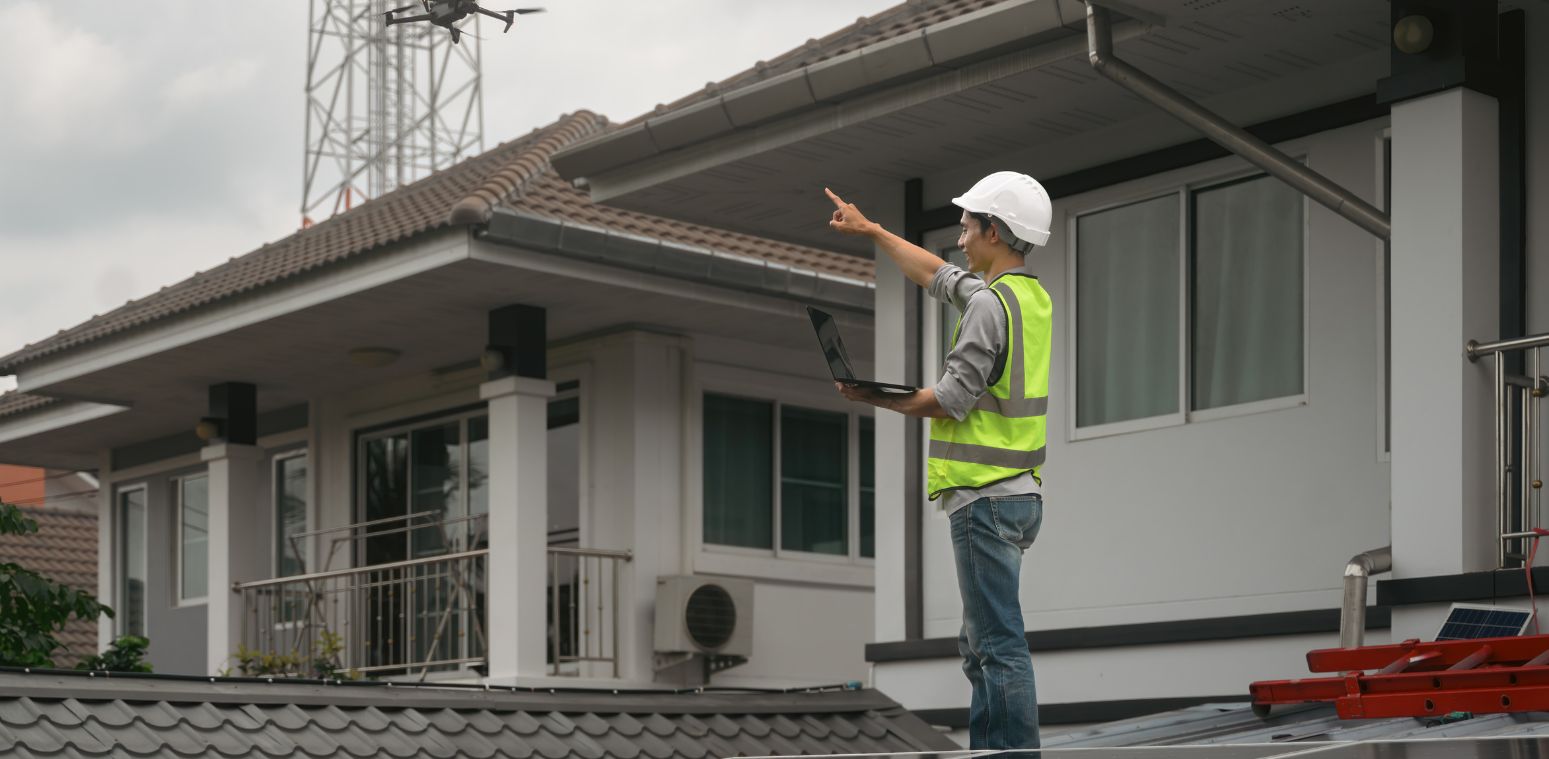
A drone roof survey uses a camera equipped drone to inspect areas of a property that may be difficult or unsafe to reach.
The drone can move around roof slopes, chimney areas, gutters, roof edges and solar panels while capturing detailed photographs and video. These images can then be reviewed to identify bird activity and any visible property damage.
Depending on the survey and property, additional technology may also help assess certain roof conditions. The purpose is to gather useful information without unnecessary climbing or guesswork.
Why Are Birds Attracted to Roofs?
Roofs offer birds shelter, warmth and protection from predators.
Pigeons often choose sheltered areas beneath solar panels, around chimney stacks and along roof edges. Gulls may use flat roofs and open roof areas for nesting, while smaller birds can find gaps around tiles, eaves and loft access points.
Solar panels can be particularly attractive to pigeons because the space underneath provides a protected area for nesting.
Once birds begin using the same roof regularly, droppings and nesting material can quickly build up.
What Problems Can Birds Cause on a Roof?
Bird droppings can make roofs, gutters and solar panels dirty while also contributing to deterioration of some surfaces over time.
Nesting materials can block gutters and rainwater outlets. When water cannot drain properly, it may overflow or collect around roofing areas and contribute to damp or water damage.
Bird activity may also occur around damaged tiles, flashing and existing gaps in the roof.
Old nesting material can attract other pests too. Bird mites and insects associated with nests may sometimes become a further problem, particularly when nests are close to lofts or living spaces.
What Can a Drone Roof Survey Identify?
A drone inspection can provide a much clearer view of areas that cannot easily be seen from ground level.
It may identify visible bird nests, regular roosting areas, accumulated bird fouling, blocked gutters and damaged roofing materials.
The survey can also help inspect solar panels for signs of pigeons nesting beneath them and highlight possible access points around roof edges or loft spaces.
This information allows bird control work to focus on the actual problem areas rather than covering the entire roof unnecessarily.
Why Use a Drone Instead of a Traditional Roof Inspection?
One of the main benefits is reduced working at height.
Some roofs are steep, fragile or difficult to access safely. A drone can inspect many of these areas while the operator remains on the ground.
Drone inspections can also be quicker than arranging ladders, access equipment or scaffolding simply to understand the extent of a bird problem.
Detailed photographs and video are another advantage. They give the homeowner and bird control technician a visual record of what is happening and can help explain why particular proofing measures are recommended.
Can Drones Inspect Birds Beneath Solar Panels?
Drone surveys can be particularly useful when pigeons are regularly seen around solar panels.
Although a camera cannot always see every part beneath a panel, aerial images can reveal nesting materials, droppings, feathers and regular access routes around the installation.
Where pigeon activity is confirmed, solar panel proofing mesh may be considered to restrict access. Existing bird fouling and nesting material may also need to be dealt with appropriately before proofing is installed.
Any active nest must be considered carefully before work begins because wild birds and nests in use are protected by UK law.
When Should You Arrange a Drone Bird Survey?
Consider an inspection if birds are repeatedly landing on your roof, you hear activity around the roof space or you notice increasing amounts of droppings around the property.
Other warning signs include nesting material in gutters, pigeons disappearing beneath solar panels or bird activity in an area that cannot be clearly inspected from the ground.
A survey can also be useful before investing in bird proofing because it helps establish exactly where deterrents may be needed.
What Happens During a Drone Roof Survey?
The process normally begins with an assessment of the property and surrounding area.
The operator considers safe flight conditions, nearby buildings, people, airspace and weather before carrying out the inspection.
Photographs and video are then reviewed to identify bird activity and visible roof problems. The findings can be used to recommend suitable next steps.
At BEEKIND™ Pest Control, the aim is to understand the source and extent of the problem before recommending bird control measures.
How Long Does a Drone Roof Survey Take?
Survey time varies depending on the size of the property, roof complexity, weather and the areas requiring inspection.
A straightforward residential roof will normally require less inspection time than a large property with several roof levels, solar panels or difficult access areas.
The important part is gathering enough information to make a useful assessment rather than rushing the inspection.
How Much Does a Drone Roof Survey Cost?
The cost can vary according to property size, roof design, access, survey requirements and the level of reporting required.
A survey that identifies the exact location of bird activity may also help avoid spending money on proofing areas that do not need treatment.
What Happens After a Drone Survey?
The next step depends on what the inspection finds.
Possible bird proofing options may include bird spikes, netting, bird wire or solar panel mesh. Bird fouling may need professional cleaning, while visible roof damage may require attention from an appropriate roofing specialist.
The recommended approach should suit the bird species, property design and level of activity.
Are Drone Roof Surveys Safe and Legal?
Drone operations in the UK must follow the relevant Civil Aviation Authority rules.
A professional provider should consider safe flight planning, appropriate qualifications or permissions where required, weather conditions, privacy and neighbouring properties.
Bird control work must also take wildlife legislation into account, particularly when active nests are present.
How Can Drone Surveys Help Reduce Bird Control Costs?
A detailed survey helps identify exactly where birds are nesting and how they are using the property.
This can reduce unnecessary bird proofing and allow attention to be focused on the affected areas. Finding blocked gutters or visible roof damage early may also help prevent more costly property problems later.
Frequently Asked Questions
Can a drone detect bird nests?
Yes, visible nests and nesting materials can often be identified using clear drone imagery. Hidden nests inside roof spaces may require further investigation.
Can drones see beneath solar panels?
They can inspect around the edges of solar panels and may identify signs such as nesting material, droppings and bird access routes.
Can a drone identify roof damage?
Drone cameras can reveal visible problems such as damaged tiles, blocked gutters and damaged flashing, although some defects may require further professional inspection.
How long does a drone roof survey take?
The time depends on the size and complexity of the property and the areas that need to be inspected.
Is a drone survey safer than climbing onto the roof?
A drone can reduce the need for people to access steep, fragile or difficult roof areas simply to carry out an initial visual inspection.