Hearing scratching noises inside your walls or loft can be worrying, particularly when you cannot see where the sound is coming from. Whether it is scratching, scurrying, tapping or movement above the ceiling, these noises are often a sign that wildlife or another pest has found its way into part of the property.
One of the biggest mistakes people make is assuming they already know what is causing the noise. In reality, several different species can create very similar sounds, and the correct solution depends entirely on proper identification.
At Beekind Pest Control, we always recommend understanding what is causing the activity before deciding whether any intervention is needed. Identifying the source early can help prevent unnecessary damage and ensure the most appropriate course of action is taken.
Why You Can Hear Scratching Noises In Walls
- Understanding Wall And Loft Activity
Wall cavities, roof spaces and loft voids provide sheltered areas where wildlife can move around without being seen. These hidden spaces offer protection from the weather and are often attractive nesting locations. - Why Activity Often Happens At Night
Many species become more active during quieter periods when there is less disturbance around the property. As a result, scratching and movement are often noticed during the evening or overnight when background noise is lower. - When Scratching Sounds Should Concern You
Occasional noises do not always indicate a serious problem. However, repeated scratching, movement or gnawing sounds over several days should not be ignored, particularly if they become louder or more frequent.
The Most Common Causes Of Scratching Noises In Walls
One of the most important parts of any inspection is identifying exactly what is causing the activity.
Different species behave differently, choose different nesting locations and require different management approaches.
Some wildlife may be using roof spaces temporarily, while others may have established a more permanent nesting site within the building. Without proper identification, it is impossible to recommend the most appropriate solution.
At Beekind Pest Control, we assess every situation individually rather than making assumptions based on the sounds alone.
How To Identify The Source Of The Noise
- Listen To When The Activity Occurs
The time of day can often provide useful clues. Some species are more active during daylight hours, while others become active after dark. - Look For Other Signs
In addition to scratching sounds, you may notice nesting materials, feathers, insect activity, staining around entry points or visible damage to parts of the property. - Check The Outside Of Your Property
Small gaps beneath roof tiles, damaged soffits, vents, fascia boards or other openings can all allow wildlife to enter roof spaces and wall cavities. - Arrange A Professional Survey
Rather than guessing what may be causing the problem, a professional inspection can accurately identify the source and determine whether any action is actually required.
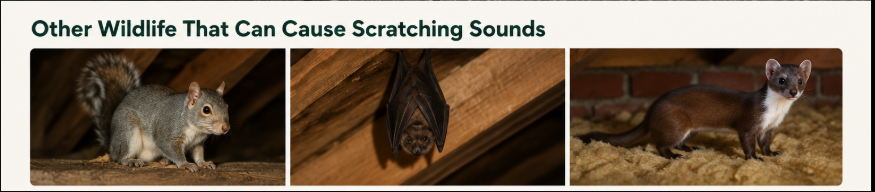
Other Wildlife That Can Cause Scratching Sounds
- Squirrels In Roof Spaces
- Squirrels often create loud scratching, scampering and gnawing noises as they move through lofts and roof voids. They are typically most active during the daytime.
- Birds Nesting Around Buildings
- Birds nesting beneath roof tiles, inside chimneys or within roof spaces can create scratching, fluttering and movement sounds, particularly during the nesting season.
- Honey Bees Inside Buildings
- Established honey bee colonies inside walls or roof spaces may produce a constant humming sound rather than scratching. Every year we attend properties where homeowners initially believe they have another pest, only to discover an established honey bee colony.
- Correct identification is essential because honey bees require a completely different approach from other pest species.
- Wasps And Other Seasonal Insects
- During warmer months, wasps nesting inside wall cavities or lofts often create buzzing sounds that can sometimes be mistaken for movement within the building.
Why Wildlife Enters Buildings
- Wildlife usually enters buildings for the same basic reasons.
- Safe shelter from the weather.
- Protection from predators.
- Suitable nesting locations.
- Access through small gaps or damaged parts of the building.
Many properties naturally provide these conditions, particularly if routine maintenance has been delayed or access points have developed over time.
The Risks Of Ignoring Scratching Noises
Although some wildlife may only remain temporarily, ongoing activity should always be investigated.
Ignoring the sounds can allow nesting activity to continue, increase the risk of damage to parts of the building and make future removal more complicated.
In some situations, protected species or honey bee colonies may also require specialist handling and relocation rather than standard pest control measures.
The earlier the cause is identified, the more options are usually available.
What To Do If You Hear Scratching In Your Walls
Avoid disturbing the area unnecessarily, as this can cause wildlife to relocate deeper into the building.
Carry out a visual inspection from outside the property if it is safe to do so and look for obvious entry points or signs of activity.
Avoid attempting to remove building materials or access cavities yourself, particularly if you are unsure what species is present.
Instead, arrange a professional inspection so the source of the activity can be identified correctly before any recommendations are made.
How Professional Pest Inspections Help
At Beekind Pest Control, every inspection begins with understanding the situation rather than immediately recommending treatment.
We identify the species involved, assess how it has gained access, explain why it has chosen that location and discuss the options available.
In some cases, simple maintenance or exclusion work may resolve the issue. In others, professional intervention may be necessary.
Our aim is always to provide honest advice, practical solutions and the information customers need to make informed decisions about their property.
How To Help Prevent Future Problems
Regular property maintenance remains one of the most effective ways to reduce the likelihood of wildlife entering buildings.
Checking rooflines, repairing damaged soffits or vents, maintaining brickwork and sealing unnecessary access points can all help reduce future problems.
Routine inspections also allow potential issues to be identified before they develop into larger or more costly situations.